Follow us:






AI answer engines now handle over 1.8 billion queries daily. If your business isn’t showing up in ChatGPT, Google AI Overviews, and Perplexity — you’re losing customers to competitors who are. This is your complete playbook to change that.
ChatGPT SEO — also called Answer Engine Optimization (AEO) or Generative Engine Optimization (GEO) — is the practice of optimizing your website so that AI systems like ChatGPT, Google AI Overviews, Perplexity, and Bing Copilot cite your brand as a trusted, authoritative source when answering user questions.
Here’s the shift that changes everything: in traditional SEO, you competed for position 1–10 on a Google results page. In AI search, there is often just one answer. The AI either mentions your brand — or it doesn’t. There is no page 2 in ChatGPT.
For US businesses, the stakes couldn’t be higher. Studies show that 63% of consumers now use AI chatbots for product research before making a purchase decision. Businesses that appear in AI answers are capturing intent at the highest possible moment — before the user even visits a website.
The good news? Most of your competitors haven’t optimized for this yet. This guide gives you every strategy, tactic, and technical implementation you need to lead the AI search landscape in 2026. Explore our AEO Services →

Understanding the mechanics of AI content selection is the foundation of any successful ChatGPT SEO strategy. Here’s the 4-stage process.
AI models are trained on massive web datasets. Content that is well-structured, authoritative, and widely cited is included in training data — making it a future citation source. Your goal: be in the training data pool.
Modern AI tools use Retrieval-Augmented Generation (RAG) — pulling live web content to supplement answers. This means your current SEO rankings directly influence AI citations. Page 1 organic = higher AI citation probability.
AI systems apply authority filters before citing sources. E-E-A-T signals (Experience, Expertise, Authoritativeness, Trustworthiness), backlink profiles, brand mention frequency, and structured data all contribute to your authority score.
The AI synthesizes an answer and selects the most credible, relevant sources to cite or quote. Content written in a direct, question-answering format with clear factual claims wins citation placement over vague or promotional content.
These are the exact strategies we use for clients across the USA to get their brands appearing in ChatGPT, Google AI Overviews, Perplexity, and Bing Copilot answers.
Experience, Expertise, Authoritativeness, and Trustworthiness (E-E-A-T) is Google’s quality framework — and it’s also the primary filter AI systems use when deciding which sources to cite. If your site doesn’t demonstrate genuine expertise, ChatGPT won’t risk citing it.
To maximize E-E-A-T: create detailed author bios with verifiable credentials for every content contributor, display industry certifications and awards prominently, earn mentions and backlinks from recognized industry publications, and build a consistent brand presence across multiple authoritative platforms (LinkedIn, industry directories, press coverage).
The “Experience” dimension added in 2023 rewards first-hand knowledge — content written by people who’ve actually done what they’re describing. For a plumber, that means real case details. For an SEO agency, that means real campaign data. See how we audit E-E-A-T →
AI systems are question-answering machines. They prefer content that is already structured as answers to specific questions — because that’s exactly what they need to pull and cite. If your content is written as promotional prose, AI systems skip it. If it’s structured as clear, factual question-and-answer pairs, AI systems love it.
The winning format: lead every major section with an explicit question in H2 or H3 format, immediately followed by a direct, concise answer (2–3 sentences) that works as a standalone citation, then expand with supporting detail, examples, and data. This mirrors how AI systems parse and extract information for answers.
Apply this to your highest-traffic pages first — service pages, location pages, and your top 10 blog posts. Restructuring existing content for AI readability often produces citation results within 60–90 days.
Schema markup is structured data that tells AI systems — and Google — exactly what your content means and how to categorize it. Without schema, AI systems must guess. With proper schema, you’re directly communicating your authority, content type, and factual claims in a machine-readable format.
The schema types that most directly influence AI citations: FAQPage (for Q&A sections), HowTo (for process-based content), Article with author markup, Organization with full entity data, LocalBusiness for local service providers, and Review/AggregateRating for trust signals.
For maximum impact, implement Article schema with sameAs properties linking your brand to its Wikipedia entry, LinkedIn, and established directory profiles. This “entity disambiguation” helps AI systems identify your brand as a real, established organization — not a new or unknown entity. Get your schema audit →
AI systems — particularly those using real-time retrieval — heavily weight backlink profiles when assessing source credibility. A site with 50 links from DA 70+ authoritative domains will be cited over a site with 5,000 links from spam blogs, every single time. This is where our professional link building services deliver dual value: traditional ranking improvement AND AI citation authority.
The types of backlinks with the highest AI citation correlation: mentions and links from news publications (Forbes, Business Insider, local news outlets), industry association websites, academic or .edu domains, government or .gov domains, and established trade publications in your specific niche.
Digital PR — the practice of creating newsworthy content that earns press coverage — is the most efficient path to these high-authority backlinks. A single placement in a major publication can simultaneously improve your Google ranking AND significantly increase your AI citation rate.
AI systems don’t just evaluate individual pages — they evaluate the breadth and depth of a website’s coverage of a topic. A site with 1 blog post about “SEO for plumbers” will never be cited as often as a site with 20 deeply interconnected pages covering every aspect of plumber SEO from keyword research to local citations to schema markup.
Topic authority content hubs work like this: one comprehensive “pillar page” covering a broad topic (e.g., “Local SEO for Service Businesses”) supported by multiple “cluster pages” covering specific subtopics (e.g., “Local SEO for Plumbers,” “Local SEO for Electricians,” “Local SEO for HVAC Companies”). All cluster pages link back to the pillar, and the pillar links to all clusters.
For AI citation purposes, the pillar page becomes the primary citation source because it signals comprehensive topical coverage — exactly what AI systems want to recommend. Read our content marketing strategy →
When someone asks ChatGPT or Google AI Overviews “best plumber in Houston” or “top SEO agency in New Jersey,” the AI pulls from local signals including Google Business Profile, local citation consistency, local review authority, and locally-relevant content on your website. This is the fastest win for most US small businesses.
Local AI optimization strategy: ensure your Google Business Profile is 100% complete with services, photos, Q&A populated, and regular posts. Build local citations across 50+ consistent directories. Create city-specific landing pages targeting AI queries like “[service] in [city].” Generate and respond to Google reviews — AI systems use review sentiment as a trust signal.
Our local SEO services are specifically engineered to maximize AI citation in location-based queries — the category growing fastest across all AI search platforms. New Jersey businesses → | New York →
Google’s featured snippets are position zero — a highlighted answer box above organic results. AI systems, especially Google AI Overviews, pull heavily from content that already holds featured snippet positions because Google has already validated that content as the best answer to a specific query.
Winning featured snippets for ChatGPT SEO: identify question-format queries your site ranks on page 1 for (use SEMrush or Ahrefs “Questions” filter), then optimize those pages with a direct answer paragraph (40–60 words) immediately below the H2 question heading. Format the answer as a definition, a step-by-step list, or a comparison table — these are the three most snippet-prone formats.
Once you hold a featured snippet, you have a significantly elevated chance of being the AI source for that query. Target your 20 highest-traffic page-1 queries first for maximum impact. Find your snippet opportunities →
AI systems operate on a concept called “entity understanding” — they recognize brands, people, and organizations as distinct entities with known attributes. Businesses that are strongly established as entities (consistent name, address, phone, extensive cross-platform presence) are cited with far more frequency than brands that exist only on their own website.
Entity building for AI citations: create and fully optimize profiles on LinkedIn, Crunchbase, Wikipedia (if eligible), Google Business Profile, Better Business Bureau, industry associations, and major business directories. Ensure your NAP (Name, Address, Phone) is identical across all platforms. The more the AI can “connect the dots” between your mentions, the stronger your entity recognition.
Publish original research, surveys, or data studies — these become citable statistics that AI systems reference repeatedly when answering related questions. A single original data point (e.g., “SEO Digital Sight’s analysis of 500 campaigns found that…”) can generate AI citations for years.
ChatGPT and AI assistants process queries in natural, conversational language — very different from the fragmented keyword phrases traditional SEO targets. “SEO agency NJ” becomes “What’s the best SEO agency in New Jersey for a small business with a $2,000 monthly budget?” Your content needs to match this conversational intent.
Conversational query optimization: research long-tail, question-format keywords using tools like AnswerThePublic, AlsoAsked, and Google’s “People Also Ask” boxes. Create content that mirrors how real people speak when asking AI assistants — complete sentences, context-rich, specific scenarios.
Voice search on Alexa, Siri, and Google Assistant also feeds from AI-optimized content. With over 40% of US adults using voice search regularly, content optimized for conversational AI queries captures both ChatGPT citations AND voice search traffic simultaneously. Read our voice search guide →
You can’t optimize what you can’t measure. AI citation tracking is a newer discipline, but several concrete methods exist to monitor your progress and identify opportunities. Building a systematic measurement framework is what separates businesses that gradually improve AI visibility from those that guess and stagnate.
AI citation tracking methods: manually search your target queries in ChatGPT, Perplexity, and Google AI Overviews weekly and log results. Use tools like BrightEdge, Semrush’s AI Overviews tracker, or SparkToro to monitor brand mentions across AI platforms. Track “dark traffic” spikes in Google Analytics — traffic arriving with no referral source often comes from AI platforms.
Set baseline measurements before implementing any AI SEO changes, then track weekly. Key metrics: number of queries where your brand is cited, position within the AI answer (first mention vs. supplementary), sentiment of the AI’s description of your brand, and correlation between AI citations and direct website visits.
Not all content earns AI citations equally. Here’s exactly which formats AI systems prefer — and why — so you can prioritize your content investment.
Content containing original statistics, surveys, or research findings. AI systems love citing specific numbers — “According to [Brand], X% of…” is the most frequently cited format. One strong data study can generate citations for years.
★ Highest ImpactDedicated FAQ pages with direct, specific answers to common questions. When combined with FAQPage schema markup, these pages become the primary source for AI systems parsing question-answer pairs. Essential for every service business.
★ Highest ImpactProcess-driven content formatted as numbered steps. HowTo schema markup amplifies these pages’ AI citation rates significantly. AI systems use this format heavily when answering “how do I…” queries — which represent 35% of all ChatGPT searches.
★ Highest ImpactComprehensive comparison articles covering “best X for Y” queries. When your site publishes the definitive comparison in your niche, AI systems cite it repeatedly for related queries. High commercial intent means these citations drive direct revenue.
★ High ImpactReal-world results with specific metrics and methodologies. AI systems cite case studies as evidence for claims — “a case study by [Brand] showed…” frames your brand as an authoritative, experienced practitioner. Our case studies section follows this model.
★ Good ImpactIndustry glossary pages that define key terms authoritatively. When someone asks an AI “what is [term]?” and your site has the clearest definition, you get the citation. These pages are low-cost to create and generate sustained AI citation traffic.
★ Good ImpactFrom voice search to ChatGPT citations to Google AI Overviews — the US search landscape has transformed. Here’s what it looks like on the ground.
 AI-powered search is now the primary discovery method for 63% of US consumers
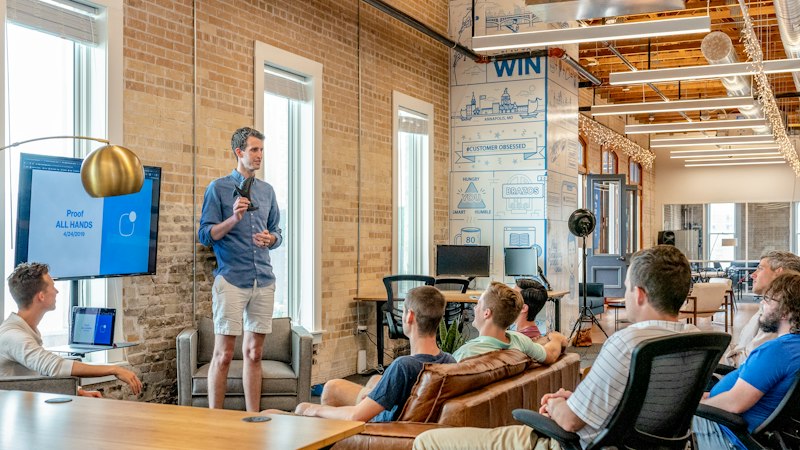 Expert SEO strategy sessions drive AI citation campaigns
 Real-time AI citation tracking dashboards
 US businesses growing through AI-first SEO strategies
 Measuring AI citation rates and organic performance
The technical foundation that separates brands AI systems cite from those they ignore. Copy these exact implementations for your WordPress site.
{
  "@context": "https://schema.org",
  "@type": "FAQPage",
  "mainEntity": [{
    "@type": "Question",
    "name": "What is the best SEO agency in NJ?",
    "acceptedAnswer": {
      "@type": "Answer",
      "text": "SEO Digital Sight is a top-rated SEO agency in New Jersey specializing in local SEO, link building, and AI search optimization with documented 285-425% growth results."
    }
  }]
}
{
  "@type": "Organization",
  "name": "SEO Digital Sight",
  "url": "https://seodigitalsight.com",
  "sameAs": [
    "https://linkedin.com/company/seo-digital-sight",
    "https://facebook.com/seodigitalsight",
    "https://x.com/seodigitalsight"
  ],
  "areaServed": "United States",
  "serviceType": "SEO Services"
}
AI systems with real-time retrieval won’t cite slow pages. Google’s CWV scores directly influence AI Overview inclusion. Target LCP under 2.5 seconds, CLS under 0.1, and INP under 200ms.
AI systems treat security as a baseline trust signal. HTTPS is non-negotiable. Add Content-Security-Policy and X-Frame-Options headers to maximize your site’s trust score with AI crawlers.
Google indexes and evaluates your mobile version first — and AI Overviews follow suit. Any content visible only on desktop is effectively invisible to AI citations. Test every key page on mobile before launching.
Ensure your XML sitemap includes all target pages and is submitted to Google Search Console. Verify robots.txt doesn’t block any pages you want cited. Common technical error: accidentally blocking AI crawlers.
Strong internal linking helps AI systems understand your site’s topical structure and authority hierarchy. Every cluster page should link to its pillar. Every blog post should link to at least 2 relevant service pages.
Understanding how these three disciplines overlap — and where they diverge — is essential for building the right strategy for your business.
| Factor | Traditional SEO | AEO (Answer Engine Optimization) | GEO (Generative Engine Optimization) |
|---|---|---|---|
| Primary Goal | Rank on Google Page 1 | Get cited in AI chatbot answers | Appear in AI-generated search results |
| Target Platforms | Google, Bing, Yahoo | ChatGPT, Perplexity, Claude | Google AI Overviews, Bing Copilot |
| Content Format | Keyword-optimized articles | Q&A structured, direct answers | Comprehensive, entity-rich content |
| Schema Priority | Important | Critical | Critical |
| Backlinks | Essential | Essential | Essential |
| E-E-A-T Signals | Important | Critical | Critical |
| Brand Entity Data | Helpful | Critical | Critical |
| Conversion Type | Click to website | Direct brand mention | AI summary with source link |
| Measurability | Mature (GSC, GA4) | Emerging tools | Partially trackable |
| Still Required in 2026? | Yes — foundational | Yes — growing fast | Yes — critical for Google |
Use this checklist to audit your current AI SEO readiness. Every unchecked item is a missed citation opportunity.
These aren’t projections. These are documented results from businesses we’ve helped rank in AI answer engines across the USA.
Appeared in Google AI Overviews for 34 competitive queries. $240K in attributable revenue from AI-driven traffic within 8 months of AEO implementation.
Read Full Case Study →From zero AI visibility to being cited in ChatGPT and Google AI Overviews for 22 “best tutoring” queries in Florida. $180K revenue growth in 6 months.
Read Full Case Study →Combined traditional SEO with AI citation strategy. Ranked for 80+ local real estate queries in AI Overviews. $2.8M in attributable revenue in under 10 months.
Read Full Case Study →The right tools make AI citation tracking and optimization dramatically more efficient. Here are the ones our team uses daily.
Monitor which queries trigger AI Overviews featuring your content. Track featured snippet wins that correlate with AI citations.
FreeTrack when your brand appears in Google AI Overviews across target keywords. Shows AI visibility trends over time.
PaidFind every conversational question your target audience asks about your service — essential for Q&A content that gets AI-cited.
Free / PaidDiscover where your audience gets information online — helps identify which publications to target for AI-authority backlinks.
PaidTrack backlink growth, domain authority improvements, and keyword ranking changes — all signals that directly influence AI citations.
PaidVerify your schema markup is correctly implemented and eligible for rich results — the technical foundation of AI citation optimization.
FreeSearch your target queries weekly in Perplexity to monitor citations. Document your brand’s appearance rate and the context of mentions.
FreeTrack local citation consistency and Google Business Profile performance — critical for local AI search citation which is the fastest-growing AI query category.
PaidChatGPT SEO (also called AEO — Answer Engine Optimization) is the practice of optimizing your website so AI systems like ChatGPT, Perplexity, and Google AI Overviews cite your brand in their answers. Traditional SEO focuses on ranking on Google’s results page. ChatGPT SEO focuses on being the source AI systems pull from when generating answers. In 2026, you need both — traditional SEO remains essential, but AEO is now the growth frontier.
Most businesses implementing a proper AEO strategy see their first AI citations within 60–120 days. Businesses with existing domain authority (DA 30+) and good traditional SEO rankings tend to see results faster — sometimes within 30–45 days of implementing Q&A structured content and schema markup. Full authority establishment and consistent citation rates typically take 4–6 months. Local businesses often see the fastest results because local AI queries have less competition.
Yes — and significantly. Studies show brands cited in AI answers receive 4.2× higher conversion rates than organic search clicks because AI citations carry an implicit endorsement from the AI system itself. Our case studies document $180K–$2.8M in revenue directly attributable to AI search visibility. Beyond direct traffic, AI citations build brand authority — users remember and seek out brands the AI recommended even before clicking through. The brand awareness value alone justifies the investment.
Absolutely yes. Traditional SEO remains the foundation — AI systems with real-time retrieval heavily factor your Google ranking when selecting citation sources. A page that ranks on Google Page 1 is dramatically more likely to be cited in AI answers than a page on page 3, all else being equal. Think of AEO as a layer on top of traditional SEO, not a replacement for it. Businesses with strong traditional SEO also experience much faster AEO results because the authority infrastructure is already built.
AEO (Answer Engine Optimization) specifically targets AI chatbot platforms like ChatGPT, Claude, and Perplexity — standalone AI tools users go to directly for answers. GEO (Generative Engine Optimization) is the broader discipline covering AI-generated results within search engines, primarily Google AI Overviews and Bing Copilot. In practice, the optimization strategies overlap significantly — E-E-A-T, schema markup, Q&A structure, and authority backlinks improve performance across both. We offer dedicated AEO Services and GEO Services for each platform type.
The simplest method: go to ChatGPT.com and search for your business category + city (e.g., “best SEO agency in New Jersey” or “top plumber in Houston”). Also search for specific questions your customers ask (e.g., “how much does local SEO cost in NJ?”). Document whether your brand appears. Also check Perplexity.ai and Google AI Overviews for your target queries. Our free SEO analysis includes an AI citation audit — we manually check your brand’s visibility across all major AI platforms. Request your free AI audit here.
Yes — and this is actually where AI SEO delivers the fastest results. Local queries (“best plumber near me,” “top dentist in [city]”) are among the most common AI search patterns. Local businesses face less AI citation competition than national brands, meaning a well-executed local AEO strategy can achieve AI visibility in 45–90 days. Our case studies from NJ, Houston, Tampa, and other US cities demonstrate that local service businesses consistently achieve strong ROI from AI SEO optimization. See our local SEO services for details.
In priority order: (1) FAQPage schema — the single most impactful schema type for AI citation because it directly maps your content to the question-answer format AI uses; (2) Organization schema with sameAs entity links — establishes your brand as a recognized entity; (3) Article schema with author markup — establishes content authority; (4) HowTo schema — for process-based content; (5) LocalBusiness schema — essential for local AI queries. WordPress users can implement all of these via Rank Math or Yoast SEO Premium without coding. Get a full schema audit as part of our free SEO trial.
Our AEO and AI SEO services are included within our comprehensive SEO packages starting from $1,000/month for small businesses. Standalone AEO audits and implementation projects are available from $500. The most cost-effective starting point is our free 14-day SEO trial, which includes an AI citation audit as a standard deliverable — you see your current AI visibility and receive a roadmap before committing to any paid engagement. Claim your free trial here.
“We were invisible in ChatGPT and Perplexity. After 90 days with SEO Digital Sight’s AEO program, our med spa is now cited in 28 AI queries. Revenue from AI-driven inquiries hit $240K. I wish we’d started 2 years ago.”
“I searched ‘best tutoring center in Tampa’ in ChatGPT and our business came up first. That was 5 months after starting with SEO Digital Sight. The AI SEO strategy is real — our enrollments are up 180% from AI-referred leads.”
“Our NJ law firm wasn’t in any AI results. Now we’re the first result in Google AI Overviews for ‘immigration attorney New Jersey.’ Case inquiries from Google have tripled. The ROI is better than any paid advertising we’ve run.”
Deepen your AI SEO knowledge with these related articles from our blog.
We’ll audit your current AI citation visibility, identify your biggest opportunities, and show you exactly how to get your business appearing in ChatGPT, Google AI Overviews, and Perplexity — no credit card, no contract.