
Thanks , I've recently been searching for information about this subject for a while and yours is the greatest I've came upon till now.







New Jersey is home to 908,209 small businesses, representing 99.6% of all businesses in the state and employing 1.8 million individuals, nearly half of the state’s workforce. Despite these impressive numbers, small business owners face an uphill battle competing against corporate giants with massive marketing budgets and established online presence.
The good news? Small businesses entering 2026 have more opportunities than ever to compete effectively. While you cannot outspend large competitors, you can absolutely outsmart them with targeted SEO strategies that leverage local advantages and authentic connections corporate brands struggle to replicate.
This comprehensive guide reveals how New Jersey small businesses can dominate local search results, capture high-intent customers, and build sustainable competitive advantages through strategic SEO, even when competing against corporations with seemingly unlimited resources.
Large corporations possess obvious advantages including bigger marketing budgets, established brand recognition, national advertising campaigns, larger content teams, and advanced technology infrastructure. However, small businesses hold powerful countering advantages that SEO amplifies effectively.
Hyperlocal Expertise
Small businesses intimately understand their specific New Jersey communities, neighborhoods, customer preferences, and local market dynamics in ways national brands cannot replicate. A plumber in Bergen County knows exactly which homes have older pipe systems. A restaurant owner in Hoboken understands neighborhood dining preferences. A retail shop in Princeton knows what local customers want before they search for it. This knowledge translates into highly targeted content that resonates deeply with local audiences. When someone searches “best Italian restaurant near me in Jersey City,” hyperlocal businesses with authentic neighborhood knowledge naturally outrank generic corporate chains.
Authentic Relationships
Personal connections with customers create trust signals that search engines recognize and reward. Genuine testimonials from community members, involvement in local events and organizations, and real faces behind the business build credibility that algorithms value and customers trust. Local SEO services help small businesses showcase these authentic relationships across digital platforms, turning community connections into ranking advantages.
Agility and Responsiveness
Quick adaptation to market changes, rapid content updates and optimizations, immediate response to customer feedback, and nimble testing of new strategies allow small businesses to outmaneuver slower corporate decision-making processes. When a major storm hits New Jersey, a local roofing contractor can publish helpful content within hours. Corporate competitors must navigate approval processes that take days or weeks, missing time-sensitive opportunities.
Niche Specialization
Deep expertise in specific services or industries, specialized knowledge addressing unique customer needs, and focused authority in narrow topics enable small businesses to dominate specialized searches where generalist corporations struggle to compete effectively. A boutique accounting firm specializing in restaurant finances will outrank generic corporate tax services for searches like “restaurant accounting services New Jersey” because their content demonstrates specific expertise rather than generic capabilities.
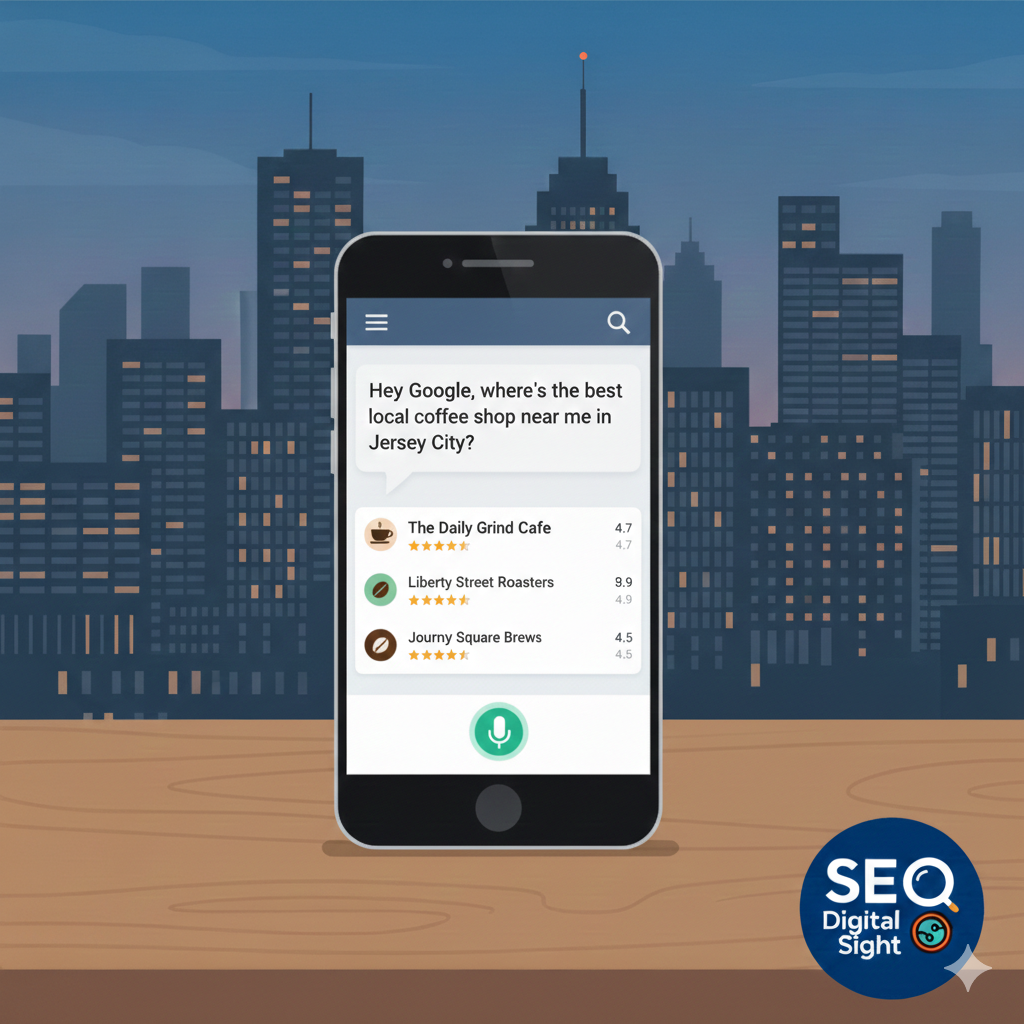
Voice search has fundamentally changed how people find local businesses. Instead of typing “plumber Newark NJ,” customers now ask their phones “who is the best plumber near me” or “where can I find emergency plumbing services tonight.”
These conversational searches favor small businesses optimized for natural language queries. People do not speak in keywords. They ask complete questions expecting direct, helpful answers. Small businesses creating content that answers real questions in conversational tones naturally align with how people actually search today.
Optimizing for voice search means structuring content around questions customers actually ask. What are the best pizza places in Montclair? How much does roof repair cost in New Jersey? Who fixes air conditioning on weekends in Camden County? Small businesses answering these questions directly and conversationally capture voice search traffic corporate competitors miss.
Google AI Overview optimization and preparation for AI answer engines requires this conversational, question-focused approach. When customers ask ChatGPT or Google Assistant for recommendations, businesses with clear, direct answers get cited and recommended.
Small businesses cannot rely on brand recognition or massive budgets. Instead, strategic execution of proven SEO tactics creates competitive advantages that corporate budgets cannot easily overcome.
Dominate Your Geographic Territory
While corporate competitors target broad regions or entire states, small businesses should own specific cities, neighborhoods, and ZIP codes with laser focus. New Jersey SEO services designed for local businesses emphasize geographic dominance over broad visibility.
Create dedicated pages for every city and neighborhood you serve. A landscaping company should have separate pages for Westfield landscaping services, Summit lawn care, Millburn yard maintenance, and Short Hills garden design. Each page should include neighborhood-specific information, local project examples, testimonials from that area, and relevant community details.
This hyperlocal approach captures searches corporate competitors miss because they cannot economically create content for every neighborhood. When someone searches “landscaper in Summit NJ,” your dedicated Summit page with local examples and testimonials will outrank a generic corporate page targeting all of New Jersey.
Build Genuine Local Authority
Search engines determine authority through signals including backlinks from reputable sources, mentions across the web, reviews and ratings, social proof and engagement, and consistent business information across platforms.
Small businesses build local authority faster than corporations through strategic community involvement. Sponsor local Little League teams earning mentions on community websites. Participate in chamber of commerce events getting featured in local news. Partner with other local businesses for cross-promotion and link exchanges. Contribute expertise to local publications and blogs.
These activities generate local backlinks and mentions that signal community authority to search engines. Link building services focused on local relevance outperform generic link acquisition for small businesses competing in specific markets.
Create Content That Answers Real Questions
Corporate content often feels generic because it targets massive audiences. Small business content wins by addressing specific local questions and concerns people actually voice when searching.
Start by documenting questions customers ask during consultations, phone calls, and in-person visits. What do people want to know before hiring your services? What concerns do they express? What misconceptions need correcting? Turn each question into detailed, helpful content that provides genuine value.
Following best practices for writing blog posts ensures content both ranks well and converts readers into customers. Focus on helpfulness over sales pitches. Demonstrate expertise through detailed answers. Build trust by addressing concerns honestly.
For example, a New Jersey HVAC company might create content answering “how much does central air conditioning installation cost in New Jersey,” “what size AC unit do I need for a 2000 square foot home,” “how long does HVAC installation take,” and “should I repair or replace my 15 year old furnace.” Each piece targets specific questions with detailed, honest answers that build trust and demonstrate expertise.
Leverage Customer Reviews Systematically
Online reviews dramatically impact both search rankings and conversion rates. Businesses with more recent, positive reviews rank higher in local search results and convert visitors at higher rates than competitors with fewer or older reviews.
Implement systematic review generation requesting feedback from every satisfied customer. Make the process easy by sending direct links to your Google Business Profile. Follow up personally with customers who had great experiences. Respond thoughtfully to all reviews, both positive and negative, showing prospective customers that you value feedback and resolve concerns.
Eighty-seven percent of consumers read online reviews for local businesses, with most reading at least ten reviews before feeling able to trust a business. Corporate competitors often struggle generating authentic reviews because customers interact with brands rather than people. Small businesses naturally accumulate genuine reviews from personal customer relationships.
Optimize for Mobile and Local Intent
Mobile devices now drive most local searches, with people searching for nearby services while on the go. When someone searches “coffee shop near me” or “emergency locksmith,” they want immediate answers with clear next steps.
Ensure your website loads quickly on mobile devices, displays properly on all screen sizes, includes click-to-call buttons prominently, shows clear business hours and location information, and provides simple navigation to key information. Technical excellence matters more for mobile searchers with limited patience for slow, confusing websites.
A comprehensive professional SEO audit identifies technical issues preventing mobile users from easily accessing information and contacting your business.
Your Google Business Profile often appears more prominently than your website in local searches. Complete optimization is non-negotiable for small businesses competing locally.
Claim and verify your profile, complete every section with detailed information, upload high-quality photos regularly, post updates and offers consistently, respond to all reviews promptly, and use Google Posts to share news and promotions. Keep business hours accurate, especially during holidays. Add products and services with descriptions. Enable messaging so customers can reach you directly.
Businesses appearing in the Google local map pack receive the majority of clicks for local searches. Comprehensive profile optimization dramatically increases chances of securing these premium positions.
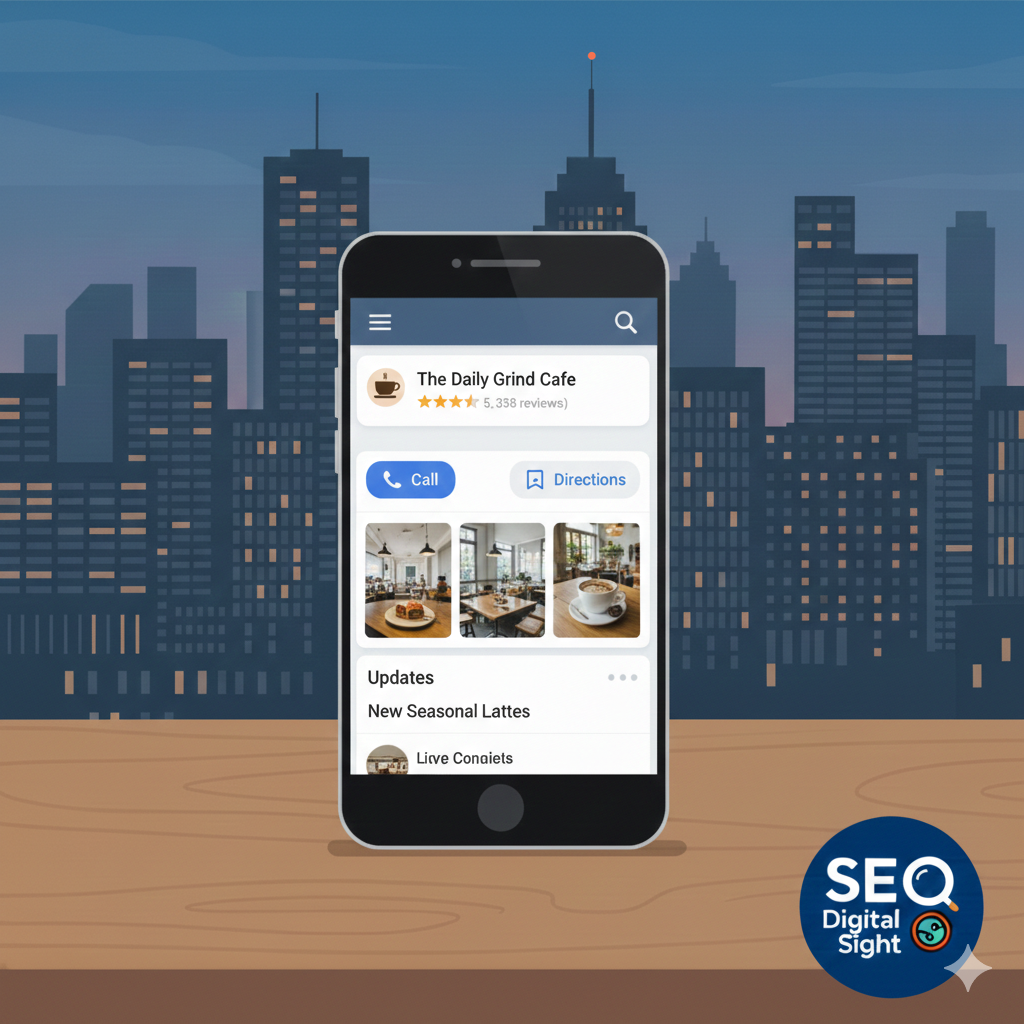
Different business types require tailored approaches reflecting unique customer behaviors and competitive dynamics.
Home Services and Contractors
Plumbers, electricians, HVAC technicians, roofers, and similar service providers benefit enormously from local SEO. Home services SEO in New Jersey focuses on emergency searches, neighborhood-specific content, before-and-after project galleries, seasonal service promotions, and educational content addressing common problems.
Create content around emergency scenarios people search for desperately like “burst pipe emergency plumber near me” or “no heat furnace repair tonight.” These high-intent searches convert at exceptional rates because customers need immediate help.
Retail and E-Commerce
Local retailers competing against Amazon and big box stores need strategies emphasizing unique value propositions. Highlight products available immediately without shipping waits, personalized service and expert advice, local pickup and same-day availability, community connections and local ownership, and exclusive items not available from corporate competitors.
For businesses with both physical locations and online sales, e-commerce SEO strategies should integrate with local optimization, capturing both in-store and online customers.
Professional Services
Lawyers, accountants, consultants, and similar professionals build authority through thought leadership content demonstrating expertise. Create detailed guides addressing common client questions, share insights about regulatory changes affecting clients, publish case studies showing successful outcomes, and contribute expert commentary to local media outlets.
Professional services also benefit from personal branding where individual professionals become recognized experts in specific practice areas or industries.
Restaurants and Hospitality
Restaurants, hotels, and hospitality businesses win through visual content, authentic reviews, local event participation, and menu or offering updates. Post high-quality food photos regularly, showcase dining atmosphere and ambiance, highlight special events and seasonal menus, feature positive customer experiences, and engage with food bloggers and local influencers.
Location matters enormously for hospitality businesses. Someone searching “romantic restaurant in Princeton” has completely different intent than someone searching the same in Atlantic City. Create content reflecting specific location character and appeal.
Track metrics directly tied to business outcomes rather than vanity numbers that do not impact revenue.
Local Search Visibility
Monitor rankings for city-specific keywords relevant to your services. Track how often your business appears in the Google local map pack for important searches. Measure impressions and clicks from Google Business Profile insights.
Qualified Lead Generation
Count phone calls, form submissions, and direct messages originating from organic search. Track which pages and keywords drive the most leads. Measure lead quality and conversion rates from organic sources compared to other marketing channels.
Customer Acquisition Cost
Calculate how much you invest in SEO compared to new customers acquired. Compare this to costs from paid advertising, direct mail, or other marketing efforts. SEO typically delivers lower acquisition costs with compounding returns over time.
Revenue Attribution
Track revenue directly tied to organic search traffic. Identify which services or products generate the most value from SEO efforts. Use this data to prioritize content and optimization efforts toward highest-value opportunities.
Small businesses working with affordable local SEO services should receive regular reporting showing these business-critical metrics rather than technical data without clear business implications.
Understanding what not to do often matters as much as knowing correct strategies.
Trying to Compete on Every Keyword
Small businesses cannot rank for broad, competitive keywords like “plumber” or “lawyer” nationally. Focus on geographic qualifiers and specific services where you can realistically compete. “Emergency plumber in Montclair NJ” is infinitely more valuable than ranking on page 10 for “plumber.”
Neglecting Mobile Optimization
If your website looks terrible or loads slowly on phones, you lose most local searches by default. Mobile optimization is not optional for small businesses relying on local customers who search while out and about.
Ignoring Reviews
Many small businesses do not actively request and respond to reviews, giving competitors easy advantages. Systematic review generation and thoughtful responses demonstrate professionalism and build trust with prospective customers evaluating options.
Creating Generic Content
Content that could apply to any business anywhere will not outrank established competitors. Specific, local, detailed content reflecting your unique expertise and market knowledge creates differentiation that generic corporate content cannot match.
Inconsistent Information Across Platforms
Your business name, address, and phone number must match exactly across your website, Google Business Profile, social media, and online directories. Inconsistent information confuses search engines and reduces local ranking potential significantly.
A thorough free SEO audit identifies these common issues before they undermine your competitive efforts.
The emergence of AI-powered search through ChatGPT, Google Gemini, Perplexity, and similar platforms creates new opportunities for small businesses to compete effectively against larger competitors.
When someone asks an AI assistant “who is the best accountant for small businesses in Morris County NJ,” the AI synthesizes information from across the web to provide recommendations. Businesses with clear expertise, strong reviews, detailed content, and consistent information get cited and recommended by AI systems.
GEO services (Generative Engine Optimization) help small businesses optimize for AI search by structuring content for easy extraction, emphasizing factual, verifiable information, building authority signals AI systems trust, and answering questions directly and comprehensively.
Small businesses often have advantages in AI search because their content tends to be more specific, authentic, and detailed than generic corporate content. AI systems recognize and reward depth and specificity when generating recommendations.
How long does it take for small businesses to see SEO results?
Most small businesses begin seeing measurable improvements within 3 to 6 months of consistent SEO effort. Initial wins often come from local optimization, Google Business Profile improvements, and easy technical fixes. More competitive keywords and broader visibility typically require 6 to 12 months of sustained effort. SEO is not a quick fix but rather a long-term investment that compounds over time. The businesses that start today have significant advantages over those that wait until competitors have established dominant positions.
Can small businesses really compete with corporate brands in search results?
Absolutely, especially for local searches with geographic intent. When someone searches “best pizza near me in Hoboken,” small local pizzerias with strong optimization often outrank national chains. Corporate brands struggle to create authentic local content, generate genuine community reviews, and demonstrate neighborhood expertise. Small businesses win by leveraging these advantages systematically through targeted SEO strategies focused on local dominance rather than broad visibility.
How much should small businesses invest in SEO?
Investment varies based on industry competitiveness, geographic scope, and business goals. Many New Jersey small businesses see strong returns investing between $1,500 to $5,000 monthly in professional SEO services. This typically includes technical optimization, content creation, local citation building, review management, and ongoing monitoring. The key is viewing SEO as a long-term investment with compounding returns rather than a monthly expense. Even modest but consistent investments deliver significantly better results than sporadic, inconsistent efforts.
What if my business already appears on Google Maps?
Appearing on Google Maps represents just the starting point, not the finish line. Most businesses can dramatically improve their map pack rankings through profile optimization, consistent review generation, enhanced content and photos, accurate business information across platforms, and strategic local SEO. Simply existing on Google Maps does not mean you maximize the opportunity. Businesses actively optimizing their presence capture disproportionate traffic compared to competitors with basic listings.
Do I need to hire an agency or can I do SEO myself?
Small business owners certainly can learn and implement basic SEO strategies themselves. However, most find that time spent on SEO takes away from core business operations where their expertise creates more value. Professional agencies bring specialized knowledge, established processes, access to premium tools, and dedicated time that most business owners cannot match while running their operations. The question is not whether you could do it yourself, but whether that represents the best use of your limited time and whether you can achieve equivalent results without specialized expertise.
How do I know if my SEO investment is working?
Effective SEO should deliver measurable business outcomes including increased phone calls and contact form submissions from organic search, higher visibility in Google Maps for local searches, improved rankings for city-specific keywords related to your services, growing website traffic from relevant local searches, and ultimately more customers and revenue attributed to organic search. Reputable agencies provide regular reporting showing these metrics and clearly connecting SEO efforts to business results. If your agency cannot demonstrate tangible improvements in business-relevant metrics, question whether the investment makes sense.
What makes SEO different from paid advertising?
Paid advertising delivers immediate visibility but stops working the moment you stop paying. SEO builds sustainable visibility that continues generating traffic and leads long after initial investments. Think of paid ads as renting attention while SEO builds owned visibility. Additionally, organic search results often generate higher trust and click-through rates than paid ads because users recognize the difference between advertisements and earned rankings. The most effective strategies combine both paid and organic approaches, using paid advertising for immediate results while building SEO for long-term sustainability.
Is SEO still relevant with AI search becoming popular?
SEO remains absolutely essential and is evolving to include AI search optimization. The fundamental goal stays the same: ensuring your business gets found when potential customers search for solutions you provide. Whether they search through Google, ChatGPT, Perplexity, or future platforms, businesses with strong SEO foundations, quality content, authoritative signals, and consistent information will appear in results. In fact, AI search may advantage small businesses with specific expertise and authentic content over generic corporate information.
Understanding these strategies means nothing without implementation. Small businesses ready to compete effectively against corporate competitors should start with clear assessment of current digital presence and competitive positioning, identification of high-value local keywords and search opportunities, development of strategic roadmap prioritizing quick wins and long-term investments, and consistent execution with regular measurement and refinement.
The future of SEO services in New Jersey increasingly favors businesses that start building advantages today. Waiting until competitors establish dominant positions makes competition exponentially more difficult and expensive.
For New Jersey small businesses ready to level the playing field and capture market share from larger competitors, contact us to discuss customized strategies aligned with your specific market, competition, and goals. Or request a free SEO analysis revealing immediate opportunities to improve visibility and drive more qualified local traffic.
The competition for New Jersey customer attention will only intensify in 2026 and beyond. Small businesses implementing strategic SEO now build sustainable advantages that become increasingly valuable and difficult to replicate over time. The question is not whether to invest in SEO, but whether you will gain competitive advantages before or after your competitors do.



WhatsApp us