


How to Optimize Your Website for Google AI Overviews and SGE in 2025

Facebook
Twitter
LinkedIn
Pinterest
WhatsApp
Email
Tumblr
Reddit
Print
Telegram
OK
VK
Skype
StumbleUpon

The search landscape has fundamentally changed. Google’s AI powered search features, AI Overviews and Search Generative Experience (SGE), are reshaping how users discover content and how websites gain visibility. If your site isn’t optimized for these AI driven features, you’re missing out on a massive opportunity to capture high intent traffic and establish authority in your niche.

This comprehensive guide reveals proven Google AI Overview optimization strategies that will position your website to be featured in AI powered search results, drive qualified traffic, and stay ahead of your competition in 2025 and beyond.

Understanding Google AI Overviews and SGE: The New Search Reality

What Are Google AI Overviews?

Google AI Overviews (formerly known as SGE snippets) are AI generated summaries that appear at the top of search results, synthesizing information from multiple sources to answer user queries directly. These overviews use Google’s advanced language models to:

  • Provide comprehensive answers to complex questions
  • Cite multiple authoritative sources
  • Include follow up questions for deeper exploration
  • Feature images, videos, and interactive elements

What Is Search Generative Experience (SGE)?

The Google Search Generative Experience represents Google’s evolution toward conversational, AI powered search. Instead of presenting a simple list of blue links, SGE provides:
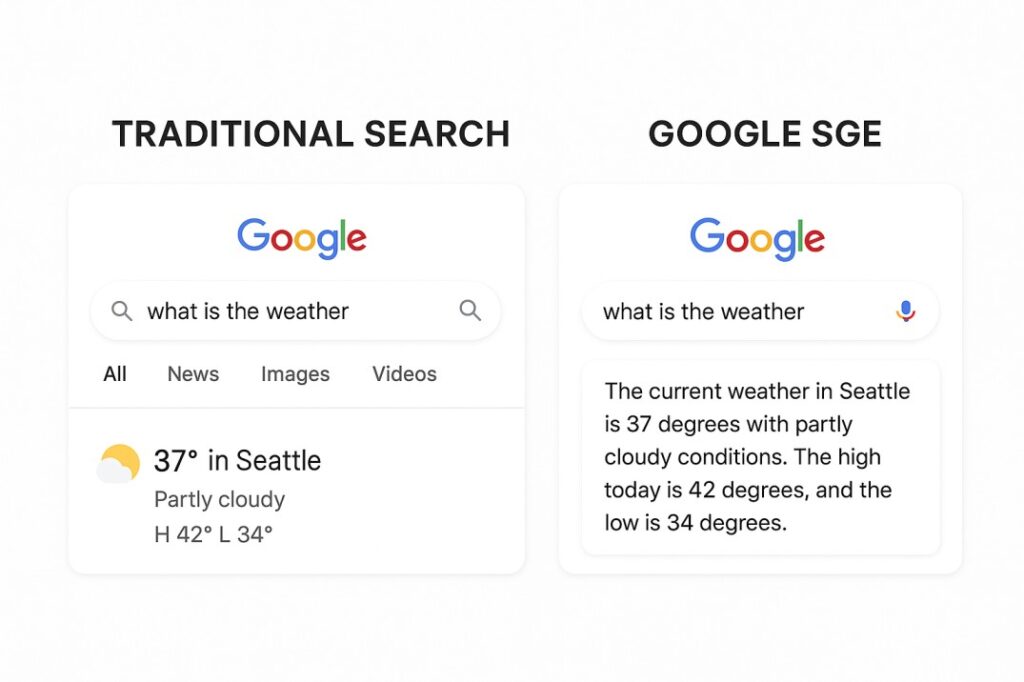
  • Contextual, conversational answers
  • Multi perspective insights from various sources
  • Interactive follow up options
  • Dynamic content organization based on user intent
Side by side comparison showing traditional Google search results versus new SGE AI powered search interface with conversational answers
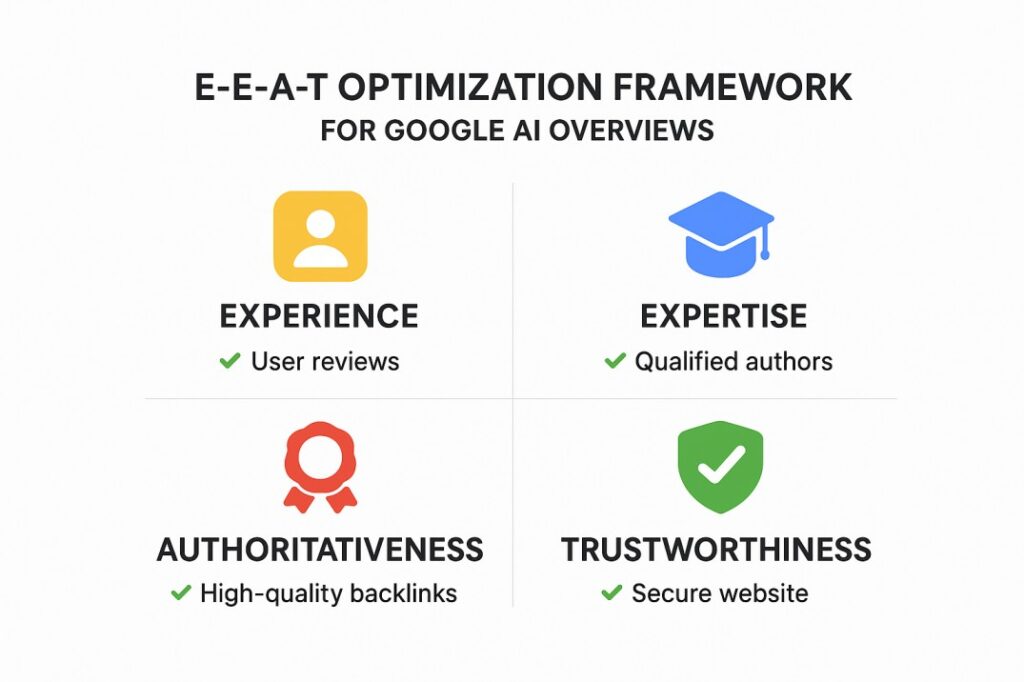
Infographic showing four pillars of EEAT experience expertise authoritativeness trustworthiness with optimization checkpoints

Why Google AI Overview Optimization Matters for Your Business

The impact of AI Overviews on search behavior is profound:

  • Visibility at the Top: AI Overviews appear above traditional organic results, capturing immediate user attention
  • Authority Building: Being cited in AI Overviews positions your brand as a trusted source
  • Increased Click Through Rates: Featured sources often see significant traffic increases
  • Competitive Advantage: Early adopters of AI Search optimization 2025 strategies gain market share
  • Future Proofing: As AI search evolves, optimized sites maintain visibility

According to recent data, websites featured in AI Overviews experience up to 40% higher click through rates compared to standard organic listings. This makes SGE optimization tips essential for any serious SEO strategy.

How Does Google AI Overview Select Sources?

Understanding the selection process is crucial for optimize website for Google SGE success. Google’s AI considers multiple factors:

Content Quality and Relevance

Google’s algorithms prioritize content that:

  • Directly answers the user’s query with clarity and precision
  • Provides comprehensive, well researched information
  • Uses natural language that matches conversational search patterns
  • Includes supporting evidence, data, and examples

E-E-A-T Signals (Experience, Expertise, Authoritativeness, Trustworthiness)

E-E-A-T for AI Overview ranking has become more critical than ever. Google’s AI evaluates:

Experience: Does your content demonstrate first hand experience with the topic?

  • Include case studies and real world examples
  • Share personal insights and practical applications
  • Document actual results and outcomes

Expertise: Are you qualified to discuss this subject?

  • Display author credentials prominently
  • Link to authoritative bio pages
  • Showcase industry certifications and qualifications

Authoritativeness: Is your site recognized as a leader in your field?

  • Earn high quality backlinks from reputable sources
  • Get cited by industry publications
  • Build a strong brand presence across multiple platforms

Trustworthiness: Can users rely on your information?

  • Maintain accurate, up to date content
  • Include proper citations and sources
  • Use HTTPS and secure connections
  • Display clear contact information and privacy policies

Structured Data and Schema Markup

AI overview schema markup helps Google understand your content’s context and purpose. Properly implemented schema significantly increases your chances of being featured in AI powered results.

Content Freshness and Updates

Google’s AI favors recently updated, relevant content. Regular updates signal that your information remains current and valuable.

User Engagement Metrics

AI algorithms analyze how users interact with your content:

  • Time on page
  • Bounce rates
  • Click through rates from search results
  • Social shares and engagement

Step by Step: How to Rank in Google AI Overviews

Step 1: Conduct AI Focused Keyword Research

Traditional keyword research isn’t enough anymore. You need to understand conversational queries and question based searches.

Action Items:

  • Use tools like AnswerThePublic, AlsoAsked, and Google’s “People Also Ask” sections
  • Focus on long tail, question based keywords
  • Target “how to,” “what is,” “why does,” and “best practices” queries
  • Analyze competitor content already featured in AI Overviews

Example Keywords to Target:

  • “How does Google AI Overview select sources?”
  • “What schema markup helps rank in Google SGE?”
  • “Steps to optimize for Google’s AI powered search”
  • “Why isn’t my website featured in Google AI Overview?”

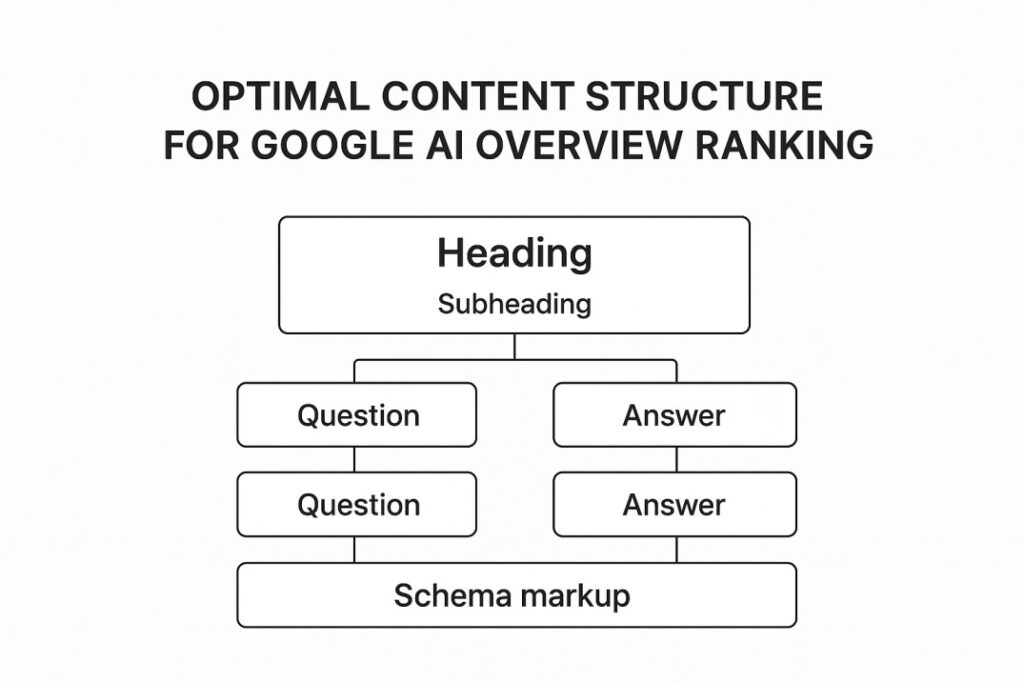
Step 2: Optimize Content Structure for Quick Answers

AI Overviews favor content that’s easy to parse and extract. Structure your content for maximum AI readability:

Use Clear Headings and Subheadings:

  • H1 for main title (include primary keyword)
  • H2 for major sections
  • H3 for subsections
  • Keep headings descriptive and keyword rich

Create Concise, Direct Answers:

  • Answer the main question in the first paragraph
  • Use short sentences and simple language
  • Break complex topics into digestible chunks
  • Include bullet points and numbered lists

Implement FAQ Sections:

  • Add dedicated FAQ blocks at the end of articles
  • Answer common related questions
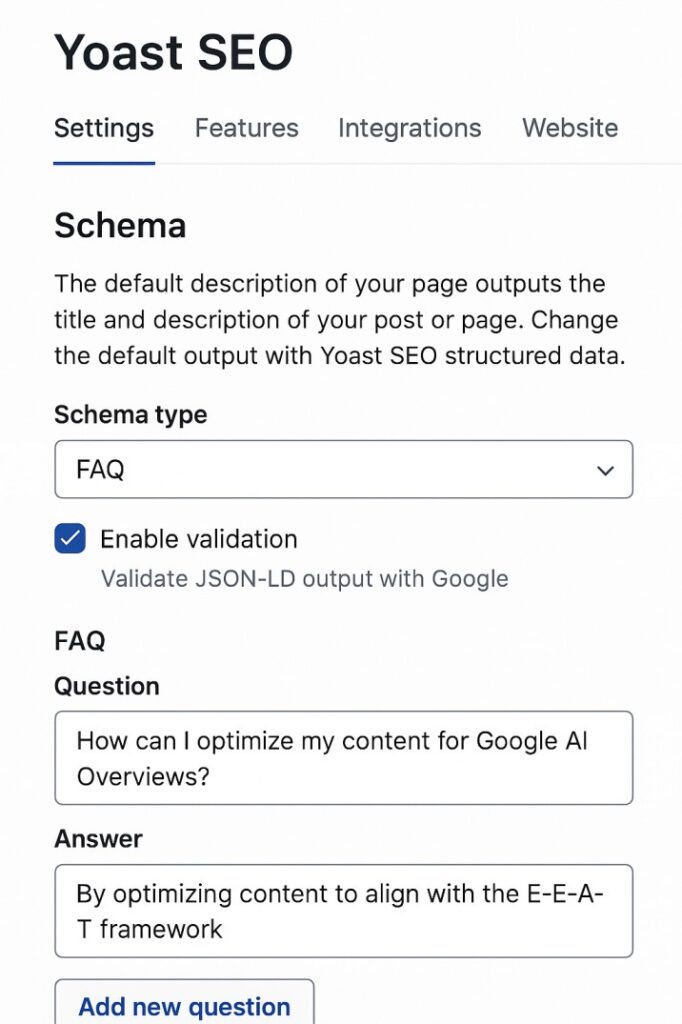
  • Use FAQ schema for Google AI to markup these sections
  • Keep answers between 40 to 60 words for optimal extraction
Diagram showing recommended blog post structure with heading hierarchy FAQ sections and schema markup placement for AI optimization
Screenshot of Yoast SEO plugin schema settings page showing FAQ schema configuration and validation options

Step 3: Implement Comprehensive Schema Markup

Schema Setup with Yoast and Validation

Schema markup is the language that helps Google’s AI understand your content. Here’s how to implement it effectively:

Essential Schema Types for AI Overviews:

  1. Article Schema:

json

{

  “@context”: “https://schema.org”,

  “@type”: “Article”,

  “headline”: “Your Article Title”,

  “author”: {

    “@type”: “Person”,

    “name”: “Author Name”

  },

  “datePublished”: “2025-01-15”,

  “dateModified”: “2025-01-15”

}

  1. FAQ Schema:

json

{

  “@context”: “https://schema.org”,

  “@type”: “FAQPage”,

  “mainEntity”: [{

    “@type”: “Question”,

    “name”: “How does Google AI Overview work?”,

    “acceptedAnswer”: {

      “@type”: “Answer”,

      “text”: “Google AI Overview uses advanced language models to synthesize information from multiple authoritative sources and provide comprehensive answers directly in search results.”

    }

  }]

}

  1. How To Schema:

json

{

  “@context”: “https://schema.org”,

  “@type”: “HowTo”,

  “name”: “How to Optimize for Google AI Overviews”,

  “step”: [{

    “@type”: “HowToStep”,

    “name”: “Conduct Keyword Research”,

    “text”: “Focus on conversational, question based queries”

  }]

}

Using Yoast for Schema Implementation:

If you’re using WordPress with Yoast SEO, follow these steps:

  1. Navigate to Yoast SEO Settings
  2. Go to Schema tab
  3. Select appropriate schema types for your content
  4. Fill in required fields (author, organization, dates)
  5. Enable FAQ and How To blocks where applicable

Validate Your Schema:

  • Use Google’s Rich Results Test tool
  • Check Schema.org validator
  • Test in Google Search Console
  • Monitor for errors and warnings regularly

Step 4: Enhance E-E-A-T Signals Throughout Your Site

Build Author Authority:

  • Create detailed author bio pages
  • Link to professional profiles (LinkedIn, industry publications)
  • Display credentials and certifications
  • Include author photos and contact information

Strengthen Site Wide Trust Signals:

  • Obtain and display industry certifications
  • Showcase client testimonials and reviews
  • Include case studies with measurable results
  • Maintain an active, informative blog
  • Ensure all contact information is current and accessible

Improve Content Credibility:

  • Cite reputable sources and link to authoritative sites
  • Include statistics with proper attribution
  • Update old content regularly with current information
  • Add publication and last updated dates
  • Include expert quotes and contributions

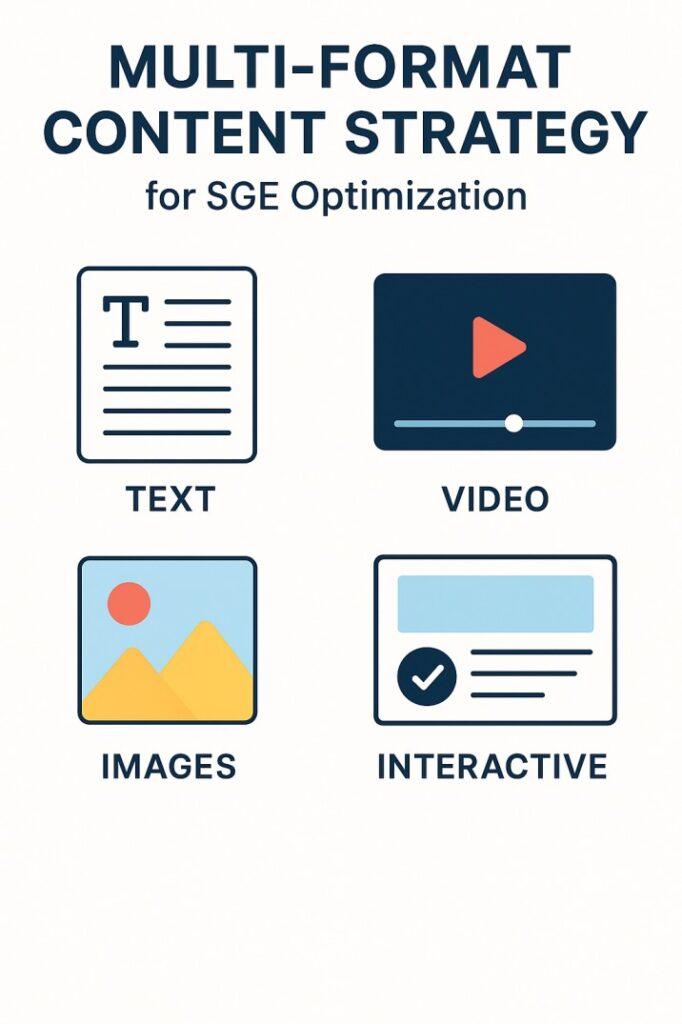
Step 5: Create Comprehensive, Multi Format Content

AI Overviews pull from various content types. Diversify your content strategy:

Long Form Content (2,000+ words):

  • Provides comprehensive coverage of topics
  • Increases dwell time and engagement
  • Offers more opportunities for keyword targeting

Visual Content:

  • Infographics that summarize key points
  • Screenshots and annotated images
  • Charts and data visualizations
  • Video tutorials and explanations

Interactive Elements:

  • Calculators and tools
  • Quizzes and assessments
  • Interactive diagrams
  • Comparison tables
Visual representation showing different content types including text video images and interactive elements optimized for Google AI powered search

Step 6: Optimize for Featured Snippets and Quick Answers

Featured snippets often feed into AI Overviews. Optimize specifically for snippet capture:

Paragraph Snippets:

  • Provide 40 to 60 word direct answers
  • Place answers immediately after relevant headings
  • Use clear, concise language

List Snippets:

  • Create numbered or bulleted lists
  • Use consistent formatting
  • Keep list items concise but complete

Table Snippets:

  • Organize comparison data in HTML tables
  • Use clear headers and labels
  • Keep tables simple and scannable

Step 7: Improve Technical SEO Foundations

Technical excellence supports AI Overview optimization:

Page Speed Optimization:

  • Aim for load times under 2 seconds
  • Optimize images (WebP format, compression)
  • Minimize JavaScript and CSS
  • Use browser caching effectively
  • Consider a Content Delivery Network (CDN)

Mobile Optimization:

  • Ensure responsive design across all devices
  • Test mobile usability in Google Search Console
  • Optimize tap targets and font sizes
  • Eliminate intrusive interstitials

Core Web Vitals:

  • Largest Contentful Paint (LCP): under 2.5 seconds
  • First Input Delay (FID): under 100 milliseconds
  • Cumulative Layout Shift (CLS): under 0.1

For comprehensive technical SEO services, consider partnering with specialists who understand the nuances of AI search optimization.

Dashboard showing Core Web Vitals metrics LCP FID and CLS with optimal ranges highlighted for Google SGE performance

Step 8: Build High Quality Backlinks from Authoritative Sources

Backlinks remain a critical ranking factor for AI Overview inclusion:

Focus on Quality Over Quantity:

  • Target sites with high domain authority
  • Seek links from industry specific publications
  • Earn editorial mentions through great content
  • Build relationships with industry influencers

Effective Link Building Strategies:

  • Create linkable assets (research, tools, comprehensive guides)
  • Guest post on reputable industry blogs
  • Get featured in roundup articles
  • Participate in expert interviews and podcasts
  • Contribute to industry publications

Monitor Your Backlink Profile:

  • Use tools like Ahrefs, Moz, or SEMrush
  • Disavow toxic or spammy links
  • Track competitor backlink strategies
  • Identify link gap opportunities
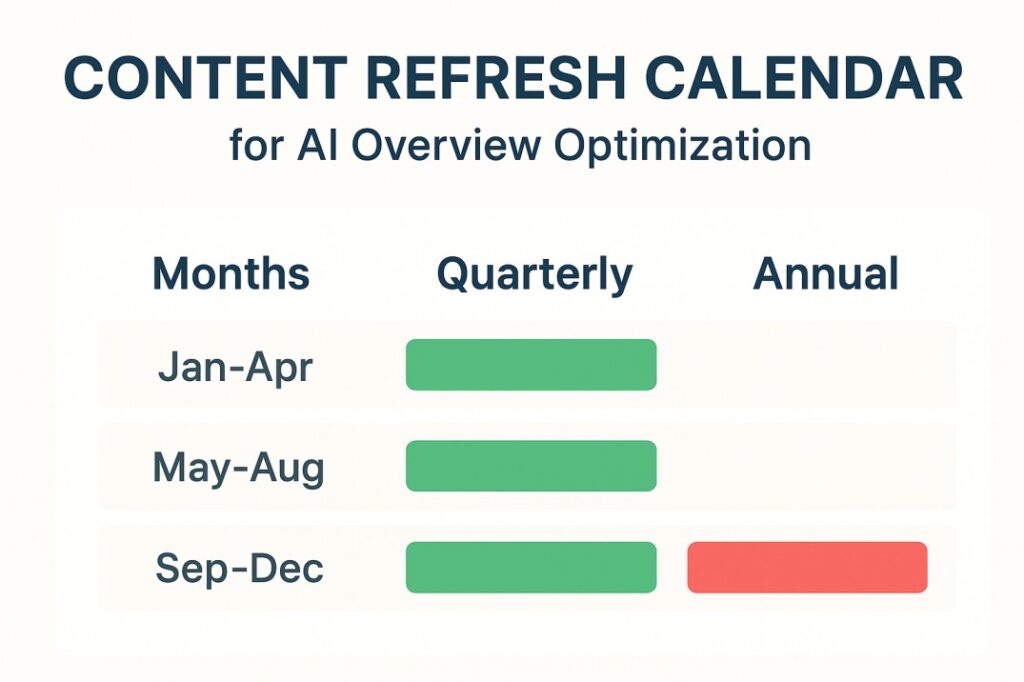
Editorial calendar showing monthly quarterly and annual content update schedule for maintaining Google AI Overview rankings

Step 9: Update and Refresh Existing Content Regularly

Why Content Freshness Matters for AI Search:

Google’s AI algorithms prioritize current, relevant information. Regular content updates signal that your site maintains accuracy and relevance.

Content Refresh Strategy:

Monthly:

  • Review top performing articles
  • Update statistics and data points
  • Add new sections covering recent developments
  • Refresh publish dates

Quarterly:

  • Conduct comprehensive content audits
  • Identify outdated information
  • Add new examples and case studies
  • Improve internal linking structure

Annually:

  • Completely rewrite underperforming content
  • Consolidate thin content pages
  • Update all images and visuals
  • Revise SEO titles and meta descriptions

Step 10: Monitor Performance and Iterate

Track your progress and refine your strategy based on data:

Key Metrics to Monitor:

  • AI Overview appearance frequency
  • Click through rates from AI citations
  • Organic traffic growth
  • Featured snippet wins
  • Keyword ranking improvements
  • User engagement metrics

Tools for Tracking:

  • Google Search Console (Performance reports)
  • Google Analytics 4 (Traffic sources and behavior)
  • SEO platforms (SEMrush, Ahrefs, Moz)
  • Rank tracking tools
  • Schema validation tools

Continuous Optimization:

  • A/B test different content structures
  • Experiment with various schema types
  • Analyze what competitors are doing differently
  • Stay updated on Google algorithm changes
  • Adjust strategies based on performance data

Real World Case Study: Our Google AI Overview Success

At SEO Digital Sight, we’ve implemented these SGE SEO strategies across our own website and client sites with remarkable results.

The Challenge

In early 2024, our website traffic plateaued despite strong traditional SEO performance. We noticed competitors appearing in AI Overviews while our content remained in standard organic results.

The Strategy

We implemented a comprehensive AI optimization strategy:

  1. Schema Implementation: Added FAQ, Article, and How To schema across all blog posts
  2. Content Restructuring: Reorganized 50+ articles with clear headings, concise answers, and FAQ sections
  3. E-E-A-T Enhancement: Expanded author bios, added credentials, and strengthened citation practices
  4. Technical Optimization: Improved Core Web Vitals scores by 35%
  5. Fresh Content Focus: Committed to publishing 2 comprehensive, AI optimized articles weekly

The Results

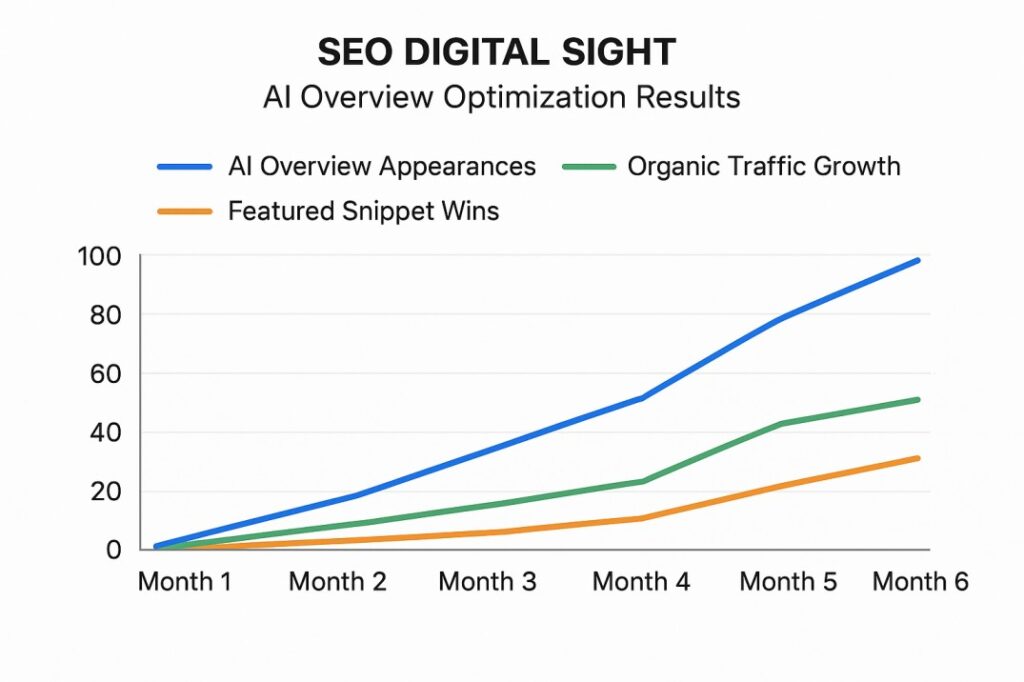
Within 6 months:

  • AI Overview Appearances: Increased from 0 to 47 featured citations
  • Organic Traffic: Grew by 63%
  • Click Through Rate: Improved by 28% for AI cited pages
  • Domain Authority: Increased from 32 to 41
  • Featured Snippets: Captured 23 new featured snippet positions

Key Learnings:

  • FAQ schema was our biggest win, accounting for 40% of AI Overview appearances
  • Content freshness mattered more than we expected; updated articles outperformed new ones
  • Technical optimization laid the foundation for AI feature eligibility
  • Building author authority significantly improved E-E-A-T signals
Line graph showing 6 month progression of AI Overview appearances organic traffic growth and featured snippet wins after implementing SGE optimization strategies
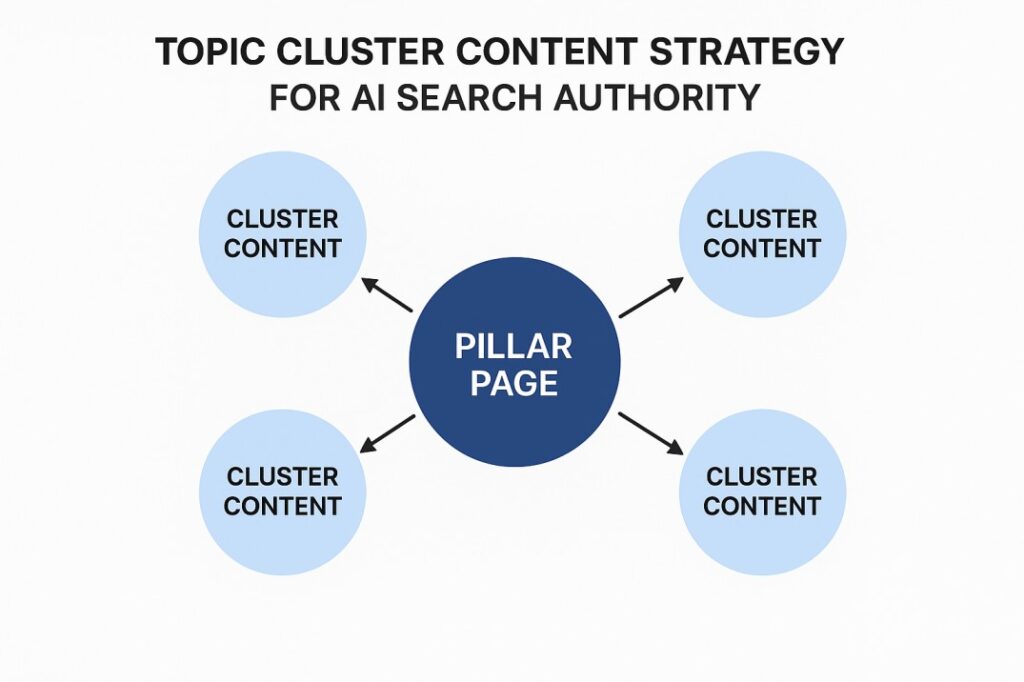
Hub and spoke diagram showing pillar page connected to cluster content pages with internal linking structure for topical authority building

Advanced SGE Optimization Tips for 2025

Optimize for Conversational Search Patterns

Voice Search Integration:

  • Target long tail, conversational keywords
  • Use natural language in content
  • Answer questions as you would speak them
  • Consider local search optimization for voice queries

For businesses in specific regions, implementing local SEO strategies alongside AI optimization creates powerful synergy.

Leverage Video Content for AI Overviews

Google increasingly features video content in AI Overviews:

  • Create short, informative video tutorials
  • Add detailed video descriptions with timestamps
  • Implement Video schema markup
  • Transcribe videos and include text versions
  • Optimize video thumbnails and titles

Implement Entity Based SEO

Help Google understand your brand and expertise:

  • Create and optimize Google Knowledge Panel
  • Maintain consistent NAP (Name, Address, Phone) across web
  • Build Wikipedia presence if possible
  • Earn mentions in authoritative industry sources
  • Use entity rich content and proper nouns

Create Topical Authority Clusters

Organize content around core topic clusters:

  • Develop comprehensive pillar pages
  • Create supporting cluster content
  • Link related articles strategically
  • Cover topics exhaustively from multiple angles
  • Establish clear content hierarchies

Common Mistakes to Avoid in AI Search Optimization

Mistake 1: Keyword Stuffing for AI

While keywords matter, over optimization harms readability and user experience. Google’s AI detects and penalizes unnatural keyword usage.

Instead: Write naturally for humans first, optimize for search engines second.

Mistake 2: Neglecting Mobile Experience

Over 60% of searches happen on mobile devices. Poor mobile experience disqualifies you from AI Overview consideration.

Instead: Prioritize mobile first design and testing.

Mistake 3: Ignoring Schema Validation

Improperly implemented schema provides no benefit and may cause errors.

Instead: Always validate schema markup using official Google tools.

Mistake 4: Creating Thin, Surface Level Content

AI Overviews favor comprehensive, authoritative content that thoroughly addresses topics.

Instead: Create in depth content that genuinely helps users.

Mistake 5: Forgetting About Content Updates

Static, outdated content loses AI Overview eligibility over time.

Instead: Implement a regular content refresh schedule.

Why Isn’t My Website Featured in Google AI Overview?

If you’re struggling to appear in AI Overviews, consider these common issues:

Insufficient E-E-A-T Signals

Your site may lack credibility indicators that Google’s AI requires. Strengthen author profiles, earn quality backlinks, and showcase expertise.

Poor Technical SEO Foundation

Technical issues prevent proper crawling and indexing. Run a comprehensive SEO audit to identify problems.

Inadequate Schema Implementation

Missing or incorrect schema markup limits AI understanding. Review and properly implement relevant schema types.

Content Quality Issues

Thin, duplicate, or low quality content won’t earn AI Overview placement. Focus on creating exceptional, unique content.

Low Domain Authority

New or low authority sites face steeper competition. Build authority through quality content and legitimate link building.

Targeting Wrong Keywords

Your keywords may not trigger AI Overviews. Research which queries generate AI powered results in your niche.

Best Practices for Google AI Overviews: Quick Reference Checklist

Content Optimization

☐ Answer questions directly in first paragraph
☐ Use clear heading hierarchy (H1, H2, H3)
☐ Include FAQ sections with schema markup
☐ Create 2,000+ word comprehensive articles
☐ Update content regularly (at least quarterly)
☐ Use natural, conversational language
☐ Include relevant images with descriptive alt text
☐ Add internal links to related content

Technical SEO

☐ Implement proper schema markup (Article, FAQ, How To)
☐ Validate all schema using Google’s tools
☐ Optimize Core Web Vitals scores
☐ Ensure mobile responsiveness
☐ Maintain fast page load speeds (under 2 seconds)
☐ Use HTTPS encryption
☐ Fix broken links and crawl errors
☐ Create XML sitemap and submit to Search Console

E-E-A-T Enhancement

☐ Display author credentials prominently
☐ Create detailed author bio pages
☐ Include expert quotes and citations
☐ Showcase testimonials and reviews
☐ Link to authoritative external sources
☐ Maintain accurate, current information
☐ Display clear contact information
☐ Earn high quality backlinks

Monitoring and Analytics

☐ Track AI Overview appearances
☐ Monitor organic traffic changes
☐ Analyze user engagement metrics
☐ Review Search Console performance data
☐ Check schema validation regularly
☐ Track competitor AI Overview presence
☐ Document what works and iterate

The Future of AI Search: What’s Coming Next

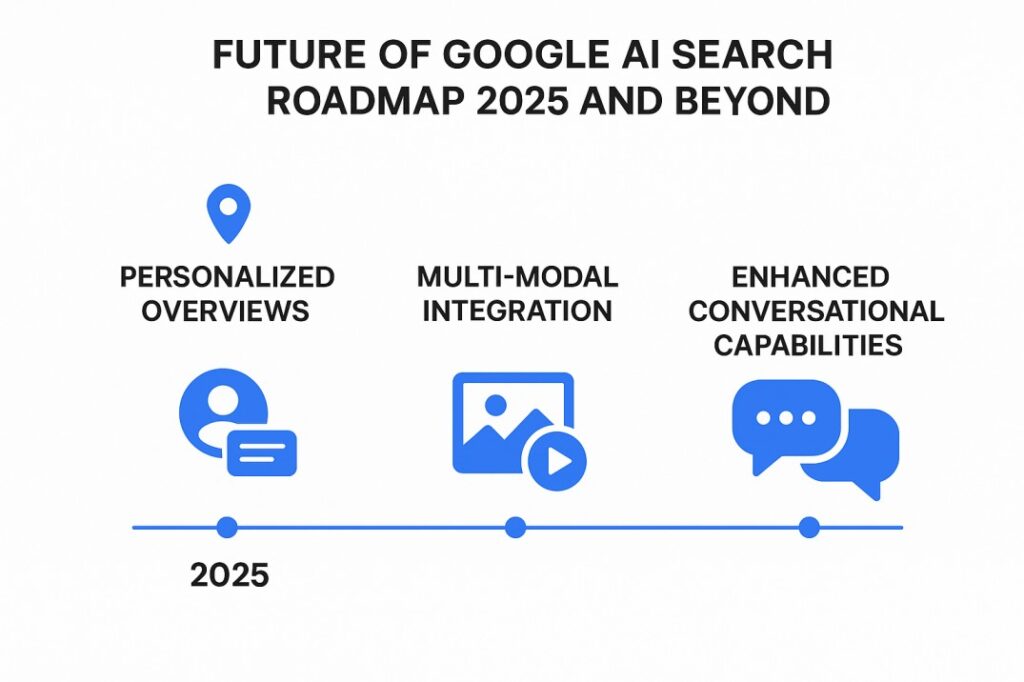
Personalized AI Overviews

Google is testing personalized AI results based on:

  • User search history and preferences
  • Location and local context
  • Previous interactions with sources
  • Social connections and networks

Multi Modal Search Integration

Future AI Overviews will seamlessly integrate:

  • Text, images, and video
  • Audio and voice search results
  • Interactive elements and tools
  • Real time data and updates

Enhanced Conversational Capabilities

Expect more sophisticated dialogue features:

  • Follow up question suggestions
  • Context aware responses
  • Multi turn conversations
  • Clarifying questions from Google

Industry Specific AI Overviews

Specialized AI summaries for:

  • E commerce and product search
  • Local business queries
  • Medical and health information
  • Legal and financial topics
  • Educational content
Timeline infographic showing upcoming Google AI search features including personalized overviews multi modal integration and enhanced conversational capabilities

Next Steps: Your AI Overview Optimization Action Plan

Ready to optimize your website for Google’s AI powered future? Here’s your step by step action plan:

Week 1: Audit and Assessment

  1. Run a comprehensive SEO analysis of your current site
  2. Identify which pages could target AI Overview opportunities
  3. Research competitors appearing in AI Overviews
  4. Document technical issues blocking optimization

Week 2: Schema Implementation

  1. Choose relevant schema types for your content
  2. Implement schema using Yoast or manual code
  3. Validate all schema markup
  4. Submit updated sitemaps to Search Console

Week 3: Content Optimization

  1. Restructure top 10 pages for AI readability
  2. Add FAQ sections with proper schema
  3. Update meta titles and descriptions
  4. Enhance E-E-A-T signals across the site

Week 4: Technical Improvements

  1. Optimize Core Web Vitals
  2. Fix mobile usability issues
  3. Improve page speed
  4. Address crawl errors and broken links

Ongoing Optimization

  • Publish 2 to 4 AI optimized articles monthly
  • Update existing content quarterly
  • Monitor performance metrics weekly
  • Stay informed about algorithm changes
  • Test and iterate based on results

Partner with AI Search Optimization Experts

Implementing comprehensive Google AI Overview optimization requires expertise, time, and ongoing commitment. If you’re looking to accelerate results and ensure proper implementation, partnering with experienced professionals makes strategic sense.

At SEO Digital Sight, we specialize in cutting edge AI Search optimization 2025 strategies that get results. Our team stays at the forefront of Google algorithm changes and AI search developments, ensuring your website remains visible and competitive.

Our AI Optimization Services Include:

  • Comprehensive AI readiness audits
  • Advanced schema markup implementation
  • E-E-A-T signal enhancement
  • Content restructuring for AI extraction
  • Technical SEO optimization
  • Ongoing monitoring and reporting
  • Regular content updates and refreshes

Whether you need local SEO services or comprehensive search engine optimization, our AI first approach ensures you’re prepared for the future of search.

Conclusion: Embrace the AI Search Revolution

Google AI Overviews and SGE represent the future of search. Businesses that optimize now will establish competitive advantages that compound over time. Those that wait risk becoming invisible as AI powered search becomes the default experience.

The strategies outlined in this guide provide a proven roadmap for how to rank in Google AI Overviews. Success requires commitment to quality content, technical excellence, and ongoing optimization. But the rewards increased visibility, higher traffic, qualified leads, and market authority make the effort worthwhile.

Start implementing these best practices for Google AI Overviews today. Audit your current site, prioritize improvements, and begin creating content optimized for AI extraction. Monitor your progress, learn from results, and continuously refine your approach.

The AI search revolution is here. Make sure your business is part of it.

Frequently Asked Questions

How long does it take to rank in Google AI Overviews?

Most websites see initial AI Overview appearances within 3 to 6 months of implementing comprehensive optimization strategies. However, timing varies based on domain authority, content quality, competition level, and implementation thoroughness. Consistent effort and ongoing optimization yield the best results.

Do I need to hire an SEO expert for AI Overview optimization?

While basic optimization can be done in house, working with experienced professionals accelerates results and ensures proper implementation. AI search optimization requires technical expertise in schema markup, E-E-A-T signals, and advanced SEO strategies. Professional guidance minimizes trial and error.

Can small businesses compete for AI Overview placement?

Absolutely. AI Overviews prioritize content quality and relevance over brand size. Small businesses with excellent content, proper optimization, and strong E-E-A-T signals can successfully compete against larger competitors. Focus on niche expertise and comprehensive topic coverage.

What’s the most important factor for ranking in AI Overviews?

No single factor guarantees placement, but E-E-A-T signals combined with properly implemented schema markup create the strongest foundation. Content quality, technical optimization, and ongoing updates all contribute significantly to success.

How often should I update content for AI Overview optimization?

Update high performing content monthly, conduct comprehensive reviews quarterly, and refresh all content annually. Google’s AI favors current, accurate information. Regular updates signal relevance and maintain competitive positioning.

Does voice search affect AI Overview optimization?

Yes, significantly. Voice searches often trigger AI Overviews, and conversational, question based content performs well in both. Optimize for natural language patterns and long tail keywords to capture voice search traffic through AI powered results.

Ready to transform your search visibility? Contact SEO Digital Sight today for a free AI readiness audit and discover how our proven optimization strategies can position your website for success in Google’s AI powered search future.


 

Leave a Reply

Your email address will not be published.

You may use these HTML tags and attributes: <a href=""> <abbr> <acronym> <b> <blockquote cite=""> <cite> <code> <del datetime=""> <em> <i> <q cite=""> <strike> <strong>